How much construction debris can a dump truck hold? The answer depends on the truck’s dimensions, the type of material being hauled, and the weight of the load.
For contractors, renovation crews, property managers, and homeowners in New York City, choosing the right hauling capacity can make construction cleanup easier to plan.
R&M DUMP provides construction and demolition (C&D) debris hauling for renovation projects, demolition cleanups, and job-site debris removal throughout NYC.
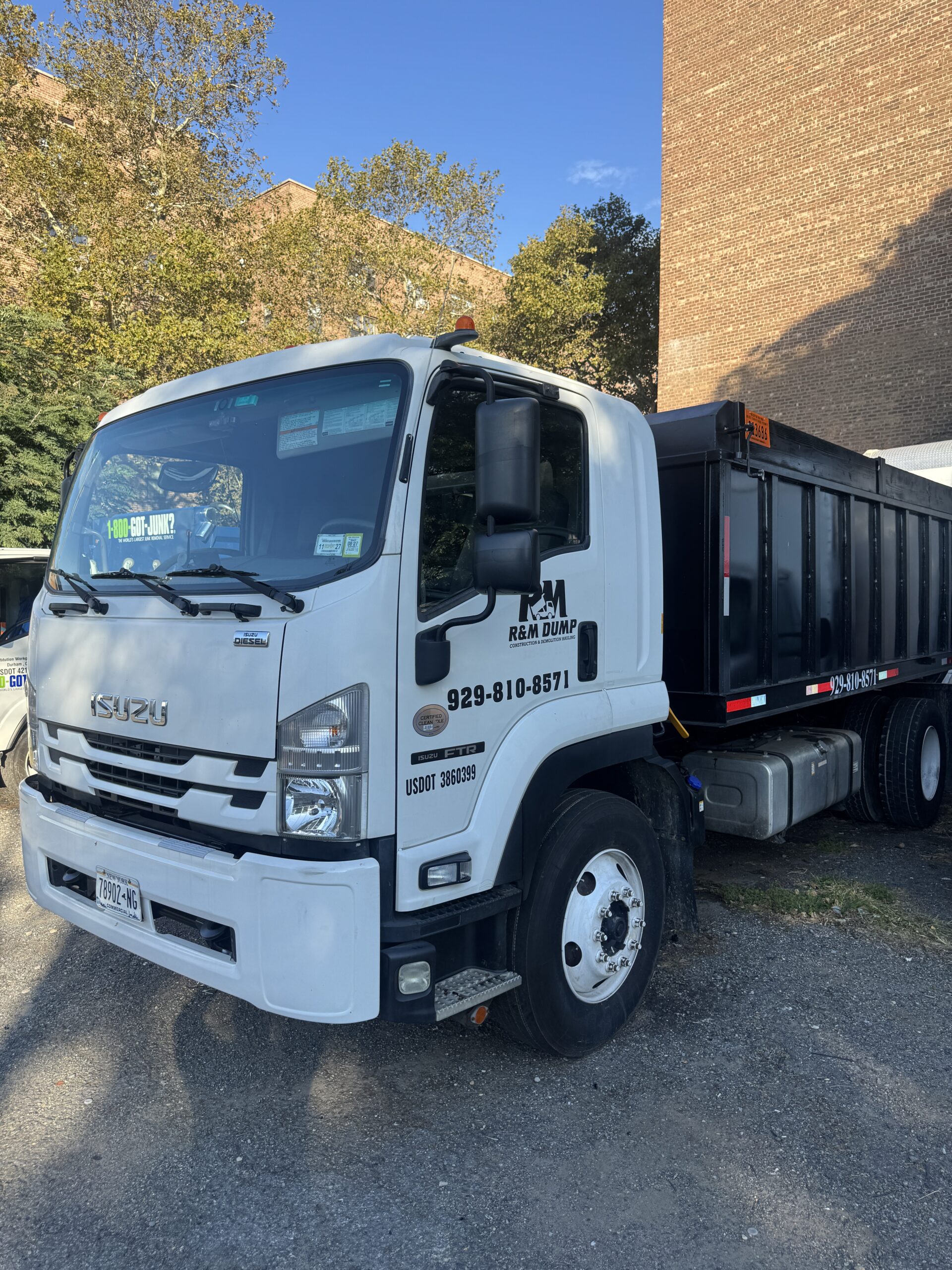
Our dump truck is approximately 16 feet long, with an estimated capacity of 27 cubic yards and side walls approximately 5.5 feet high, including the raised upper extension. Actual usable capacity depends on the body’s interior dimensions, its shape, loading conditions, and applicable weight limits.
This guide explains cubic yards, truckload sizes, common renovation examples, and the factors to consider when arranging construction debris removal.
What Is a 27-Cubic-Yard Dump Truck?
A cubic yard is a measurement of volume equal to a space measuring 3 feet long, 3 feet wide, and 3 feet high.
A 27-cubic-yard capacity represents 729 cubic feet of volume. This is a useful way to understand the potential capacity of a dump truck when estimating the amount of construction debris a project may generate.
Our truck’s estimated specifications are:
Truck bed length: Approximately 16 feet Side height: Approximately 5.5 feet, including the upper extension Estimated capacity: 27 cubic yards Typical applications: Construction debris hauling, renovation cleanup, and accepted C&D material removal
These specifications are estimates of the truck body and its potential volume. The exact capacity should be confirmed using the interior measurements and body shape.
Volume is not the only consideration. Heavy materials can reach the truck’s allowable payload before the available space is filled.
Understanding Truckload Sizes
A project does not always require a completely full truck. Thinking in terms of portions of the truck’s estimated capacity can help contractors and customers describe the amount of debris they need removed.
Using 27 cubic yards as the reference capacity:
Quarter Truckload — Approximately 6.75 Cubic Yards
A quarter truckload may suit smaller renovation projects or a limited amount of demolition debris.
Common examples include:
Drywall and wood from a small room Debris from partial bathroom demolition Lumber and materials from minor repairs A small, consolidated renovation debris pile
NYC job example: A contractor removes drywall and wood framing during a small apartment renovation in Brooklyn. The debris is gathered in one location and assessed to determine the amount of hauling capacity needed.
Half Truckload — Approximately 13.5 Cubic Yards
A half truckload may suit medium-sized renovation projects that generate more debris than a small repair or partial demolition.
Common examples include:
Drywall and framing from several walls Cabinets and flooring from a kitchen renovation Wood and mixed renovation debris Cleanup from multiple rooms
NYC job example: A Queens renovation crew removes cabinets, drywall, and flooring from a kitchen. The total pile is assessed to determine whether it fits within approximately half of the truck’s estimated capacity.
Three-Quarter Truckload — Approximately 20.25 Cubic Yards
A three-quarter truckload may suit larger renovations that produce substantial quantities of construction debris.
Common examples include:
Drywall and lumber from several rooms Larger apartment renovation cleanups
Cabinets, doors, and flooring Mixed demolition debris from an ongoing project
NYC job example: A contractor renovating a multi-room apartment in Manhattan accumulates drywall, framing, and other accepted demolition materials. The combined volume is assessed before scheduling pickup.
Full Truckload — Up to the Estimated 27-Cubic-Yard Capacity
A full truckload is intended for larger cleanup projects that require most of the truck’s usable volume.
Common examples include:
Extensive drywall and wood removal Debris from multiple renovated rooms Large contractor cleanup projects Accumulated construction debris ready for hauling
NYC job example: A contractor completes demolition across several rooms of a property in the Bronx. The debris is consolidated, inspected, and assessed to determine whether it can be removed in one load.
These truckload categories are volume estimates, not guarantees. The actual amount accepted depends on material type, payload limits, and the usable shape of the load.
Why Construction Debris Volume Can Be Misleading
Not all debris occupies space in the same way.
Wood and drywall
Wood framing, plywood, and drywall can fill a truck quickly, especially when pieces are long or bulky. Their moisture content and how they are stacked can also affect the load.
Cabinets and flooring
Cabinets, doors, countertops, and flooring may leave gaps between pieces. A pile that looks large does not always translate directly into the same number of cubic yards inside a truck.
Concrete, brick, and tile
These materials are much denser than many common renovation materials. They can reach allowable weight limits before the truck is close to full by volume.
Mixed C&D debris
Mixed construction and demolition loads require consideration of both volume and weight. Material composition can also affect which disposal facilities accept the load and what disposal charges apply.
Common NYC Projects That Require Construction Debris Removal
R&M DUMP helps customers plan hauling for a range of renovation and cleanup projects.
Project type Debris to assess
Bathroom renovation Drywall, fixtures, tile, and demolition waste
Kitchen renovation Cabinets, countertops, flooring, and wood
Apartment renovation Materials accumulated across multiple rooms
Drywall removal Sheets, offcuts, and framing
Contractor cleanup Mixed C&D debris from job sites
Property renovation Debris from several stages of construction
These examples are starting points for estimating a load. The actual truckload requirement depends on the project’s scope and the materials being removed.
How to Estimate Your Construction Debris Load
Before arranging a pickup, gather a few details about the pile.
1. Photograph the entire pile. Take wide shots and close-ups so the material type and approximate volume are visible.
2. Describe the materials. Identify whether the debris contains drywall, lumber, cabinets, flooring, concrete, tile, or mixed waste.
3. Estimate the dimensions. Approximate the pile’s length, width, and height to help estimate its volume.
4. Consider the weight. Dense or wet materials may need special consideration even when the pile looks relatively small.
5. Explain the pickup conditions. Let us know whether the debris is staged curbside or located at a construction site, and whether additional loading labor is needed.
These details help R&M DUMP assess the job and determine an appropriate hauling option.
Construction Debris Removal Throughout NYC
R&M DUMP provides construction and demolition debris hauling for contractors, renovation crews, property managers, and homeowners throughout New York City.
Whether you’re removing drywall from an apartment renovation, clearing lumber from a job site, or arranging a larger construction cleanup, we can review the material and help determine the appropriate hauling option.
For more information about construction debris disposal in NYC, consult the NYC Department of Sanitation.
Frequently Asked Questions
How many cubic yards does the R&M DUMP truck hold?
Our truck is estimated at 27 cubic yards, with an approximately 16-foot body and roughly 5.5 foot sides, including the upper extension. The exact usable volume should be confirmed using interior measurements.
Does a full truck always mean 27 cubic yards?
No. The usable volume depends on the truck body and how the material fits inside it. Weight restrictions may also limit the amount that can be hauled.
Can heavy construction debris fill the truck?
Not necessarily. Concrete, brick, and tile can reach the allowable payload before the available volume is filled.
What information should I provide for a quote?
Photos, material descriptions, approximate pile dimensions, and the pickup location help us assess your project.
Do you haul drywall and lumber?
R&M DUMP handles accepted construction and demolition materials, including drywall and wood. Describe the materials when requesting a quote so the job can be assessed appropriately.
Request a Construction Debris Removal Quote
Planning a renovation or construction cleanup in NYC?
R&M DUMP helps contractors, property managers, and homeowners arrange construction debris hauling based on their project’s materials, volume, and pickup requirements.
Send us photos of your debris pile and a description of the job so we can help assess the appropriate hauling option.