Construction and renovation projects in New York City move fast, and nothing slows a job site down like debris that has nowhere to go. Whether you are gutting a brownstone in Brooklyn, framing a new build in Queens, or running a commercial fit-out in Manhattan, construction debris removal in NYC is one of the few tasks that can stall every trade on site at once.
This guide explains how construction debris hauling works across NYC, what drives the cost, when it makes sense to hire a dump truck instead of renting a dumpster, and how to confirm that your hauler is properly permitted. It also covers what to expect for construction debris removal in Brooklyn, Queens, and Long Island, so contractors and property owners can plan disposal with fewer surprises.
R&M Dump is a Brooklyn-based, BIC-permitted hauler that handles construction and demolition (C&D) debris for contractors, demolition crews, property managers, and homeowners throughout NYC and Long Island. The sections below reflect how hauling actually works on the ground here.
What Counts as Construction Debris (C&D)?
Construction debris, often called construction and demolition debris or C&D, is the waste generated when a structure is built, renovated, altered, or torn down. It is handled differently from household trash because of its weight, volume, and disposal rules.
Common types of construction debris include:
• Wood: framing lumber, plywood, pallets, trim, and formwork
• Drywall, plaster, and sheetrock offcuts
• Concrete, brick, block, and masonry (heavy, inert material)
• Asphalt and roofing shingles
• Metal: rebar, pipe, framing, and fixtures
• Tile, porcelain, and ceramic
• Flooring, carpet, and underlayment
• Insulation, ductwork, and HVAC components
• Cabinets, doors, and windows from gut renovations
• Dirt, soil, and excavation spoils
Some materials are not accepted as standard C&D and need separate, specialized handling, including asbestos, lead paint waste, chemicals, solvents, paint, and fuels. If you are unsure whether a material qualifies, confirm with your hauler before pickup so nothing holds up the load.
How Construction Debris Hauling Works in NYC
In New York City, construction debris is not picked up by the Department of Sanitation (DSNY). DSNY collects residential household trash and recycling, but C&D debris from a job site is classified as trade waste. Trade waste must be removed by a private carting company that holds the proper city credentials. That is the detail many property owners learn too late.
A typical construction debris removal job in NYC follows a simple flow:
1. Assessment and quote: the hauler reviews the type of debris, the estimated volume or weight, and site access, then provides pricing.
2. Scheduling: pickup is booked same-day or next-day for urgent loads, or on a recurring schedule for active, multi-phase job sites.
3. Loading: a crew loads the debris into a dump truck, or the contractor loads it as the project generates waste.
4. Hauling and disposal: the loaded material is driven to a licensed transfer station or recycling facility, where it is weighed and charged a disposal (tipping) fee.
5. Documentation: a reputable hauler keeps records showing the waste was disposed of legally.
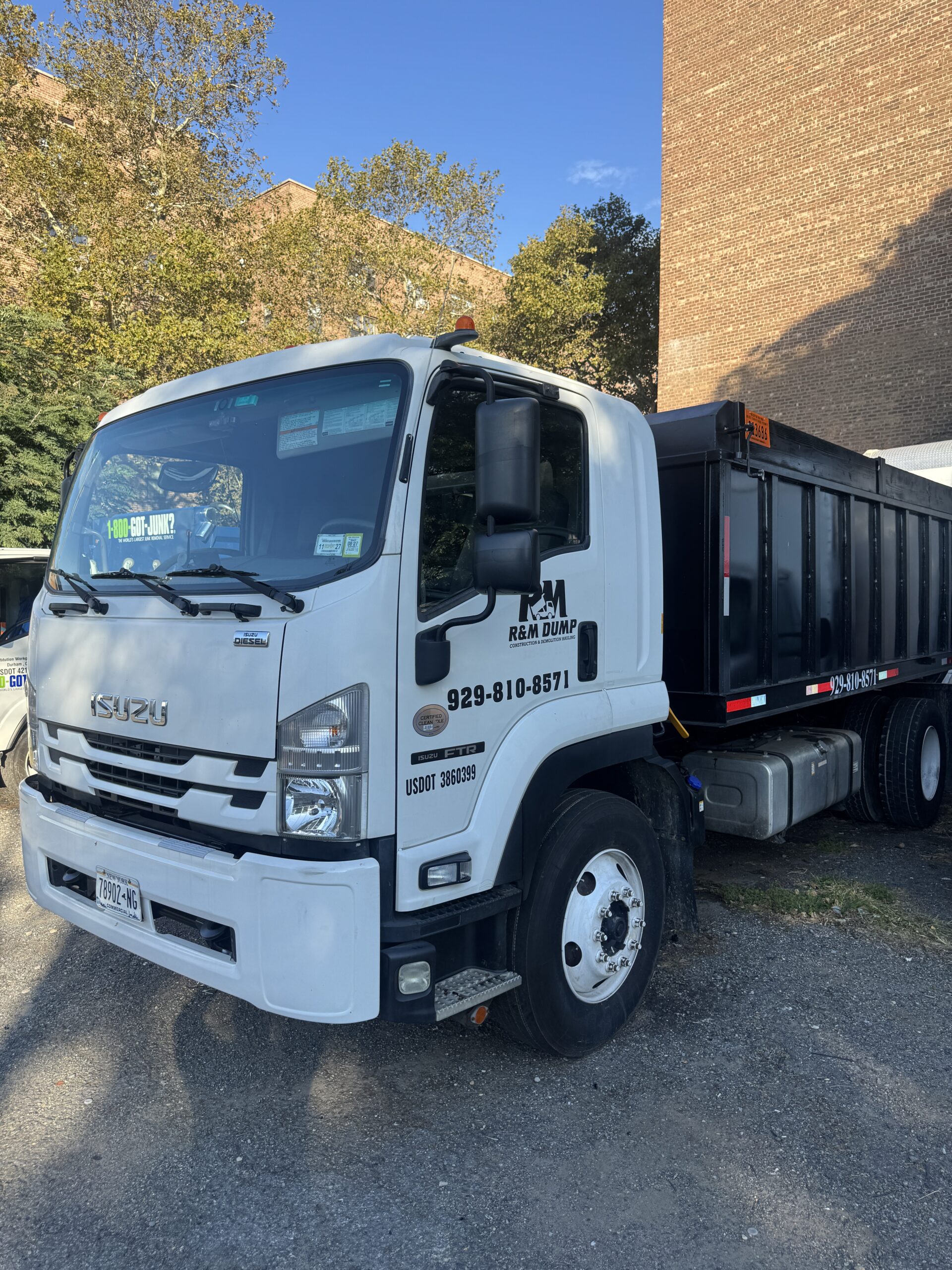
Because the city is dense and street space is limited, many NYC contractors prefer dump truck hauling over a container that sits on the curb for days. A dump truck arrives, gets loaded, and leaves, which keeps tight job sites clear and avoids street-space headaches.
What Affects Dump Truck Hauling and Disposal Costs?
Construction debris removal in NYC is rarely a flat fee, because two jobs almost never weigh the same or fill the same space. Pricing is built from a handful of factors:
• Weight and material type: disposal facilities charge by the ton, so heavy inert materials like concrete, brick, and tile cost more to dump than light materials like wood or drywall. Clean, separated concrete often dumps at a lower rate than mixed debris, which is why sorting can save money.
• Volume: the more truck space your debris fills, the more loads are needed. Pricing is often based on how much of the truck is used, measured in cubic yards.
• Disposal and tipping fees: every load that enters a transfer station is weighed and charged. Tipping fees in the NYC metro area run higher than the national average, and mixed C&D costs more per ton than clean, sorted loads.
• Labor and site access: walk-up buildings, narrow Brooklyn streets, basements, backyards, and long carry distances add time, and time adds cost.
• Number and size of trucks: a larger truck or multiple trips changes the total.
• Permits: if a container must sit on a public street, a permit may be required, which is one more reason on-call dump truck hauling is popular in the city.
• Timing: rush, same-day, and peak-season demand can affect availability and price.
Typical market ranges, for budgeting only:
Pricing model Common range Notes
Per cubic yard (debris) $75 to $150 per cubic yard Varies by material weight and market
Full truckload (labor + haul) $750 to $1450+ per load Depends on truck size and load weight
Disposal / tipping fee $100to $180+ per ton NYC metro and mixed C&D trend higher
Weight overage $180 per ton When a load exceeds an included allowance
These figures are general industry ranges, not a quote. Heavy loads (concrete, masonry, dirt) and difficult access push costs up, while sorting and clear access bring them down. For an accurate number, get a site-specific quote.
Dumpster vs. Dump Truck: When Should a Contractor Hire a Dump Truck?
Both options get debris off your site, but they fit different situations. A roll-off dumpster is a container dropped at your site that sits there while you fill it over days or weeks. A dump truck,
often with a driver, arrives, gets loaded, and hauls the debris away in the same visit, then returns as needed.
Factor Roll-off dumpster Dump truck hauling
Best for Steady buildup over days or Same-day loadouts and weeks fast-moving sites
Street space Often sits on the curb, may No long-term footprint; arrives need a permit and leaves
Speed You load on your own Debris leaves the site schedule immediately
Tight NYC sites Hard to place on narrow Flexible for brownstones and streets dense blocks
Phased projects One container, limited Scheduled or recurring capacity hauling as work moves
Heavy inert loads Weight overage fees add up Sized and routed for heavy fast C&D
Lean toward dump truck hauling when:
• There is no room to legally place a container on the street.
• The job needs debris gone the same day to stay on schedule.
• The project runs in phases and needs recurring removal.
• Loads are heavy (concrete, masonry, demolition debris) and need sized trucks.
• A container would block parking, a driveway, or pedestrian access on a tight block.
A dumpster can make sense for a slow, multi-week renovation where debris builds up gradually and street placement is not an issue. In much of Brooklyn, Queens, and Manhattan, though, limited curb space makes on-call dump truck hauling the more practical choice.
How to Choose a Properly Permitted Construction Debris Hauler
This is where New York City is different from almost everywhere else. Trade waste hauling here is regulated by the NYC Business Integrity Commission (BIC). Under Local Law 42 of 1996, companies that remove C&D debris from job sites must be licensed or registered with BIC, and their trucks carry trade waste plates. The rule exists to keep the carting industry clean and to curb illegal dumping.
Why this matters to you: if an unlicensed hauler dumps your debris illegally, the liability and fines can follow the property owner and the generator of the waste, not only the hauler. Choosing a permitted company protects your project and your budget.
Before you hire, confirm the hauler:
• Holds a valid BIC license or C&D registration (ask for the permit number).
• Carries liability insurance and can provide a certificate.
• Uses properly marked, insured trucks.
• Disposes at licensed transfer stations and keeps records.
• Gives clear, written pricing with no vague surprises at the dump.
R&M Dump operates under BIC Permit No. 517769 and is fully insured, so contractors and property owners can document that their construction debris was hauled and disposed of the right way. You can review R&M Dump's construction debris hauling services in NYC to see how permitted, contractor-focused hauling works.
Construction Debris Removal in Brooklyn, Queens, and Long Island
Debris removal needs shift from one part of the metro to the next, and a local hauler plans around those differences.
Brooklyn. Construction debris removal in Brooklyn means working around narrow one-way streets, brownstone stoops, limited parking, and tight gut-renovation sites. Dump truck hauling that arrives, loads, and leaves is usually faster and cleaner than a container parked on the curb. R&M Dump is based in Brooklyn, so response times are short and crews know the borough's access challenges.
Queens. From residential renovations in Astoria and Flushing to commercial build-outs along the main corridors, Queens projects range widely in size. Scheduled and same-day hauling keeps mixed C&D moving without tying up driveways or loading zones.
Long Island (Nassau and Suffolk). Projects on Long Island often have more room for loading but longer distances to disposal facilities, which is why truck sizing and routing matter for cost. R&M Dump serves Long Island and Suffolk County for construction, demolition, and renovation debris.
Across all of these areas, the fundamentals are the same: a permitted hauler, right-sized trucks, clear pricing, and disposal at licensed facilities.
Why Contractors and Property Owners Choose R&M Dump
R&M Dump is the dump truck and hauling division of R&M Freight Services LLC, a minority-owned business based in Brooklyn, New York. The focus is simple: construction and demolition debris hauling that keeps job sites clean and projects on schedule.
What R&M Dump offers:
• Construction debris hauling for contractors, demolition crews, and renovations
• Dump truck rental with an experienced driver
• Commercial and residential debris removal
• Job site cleanup and light demolition support
• Scheduled and recurring hauling for active, multi-phase sites
Serving Brooklyn, Queens, Manhattan, Long Island, and Suffolk County, R&M Dump is BIC-permitted, insured, and built around the needs of contractors who cannot afford to wait on debris.
Need construction debris removal in NYC or Brooklyn? Call or text R&M Dump at (929) 810-8571, or request a quote at rm-dump.com to schedule a pickup.
Frequently Asked Questions
Does the NYC Department of Sanitation pick up construction debris? No. DSNY handles household trash and recycling. Construction and demolition debris is trade waste and must be removed by a BIC-permitted private hauler.
How much does construction debris removal cost in NYC? It depends on weight, volume, material type, and site access. As a general budgeting range, expect roughly $75 to $150 per cubic yard, or $750 to $1450 and up per truckload, with disposal fees charged by the ton. A site-specific quote is the only accurate number.
Is it cheaper to rent a dumpster or hire a dump truck? For a slow, multi-week renovation with street space, a dumpster can work. For tight NYC sites, same-day removal, heavy loads, or
phased projects, dump truck hauling is usually faster and avoids street-permit and curb-space issues.
What is a BIC permit, and why does it matter? The NYC Business Integrity Commission licenses and registers trade waste haulers. Hiring a BIC-permitted hauler protects you from the liability and fines tied to illegal dumping. R&M Dump operates under BIC Permit No. 517769.
Do you remove debris from both commercial and residential projects? Yes. R&M Dump serves general contractors, demolition companies, landscapers, property managers, businesses, and homeowners.
What areas does R&M Dump serve? Brooklyn, Queens, Manhattan, Long Island, and Suffolk County.
Can you do same-day construction debris removal? Same-day and next-day pickups are available for urgent loads, subject to scheduling. Recurring hauling is available for active job sites.